Scheduled inspection and documentation
Commercial Roof Maintenance in Dallas, TX
Few roofs die of old age. They die of a plugged drain, a split lap, and two years during which nobody went up to look.
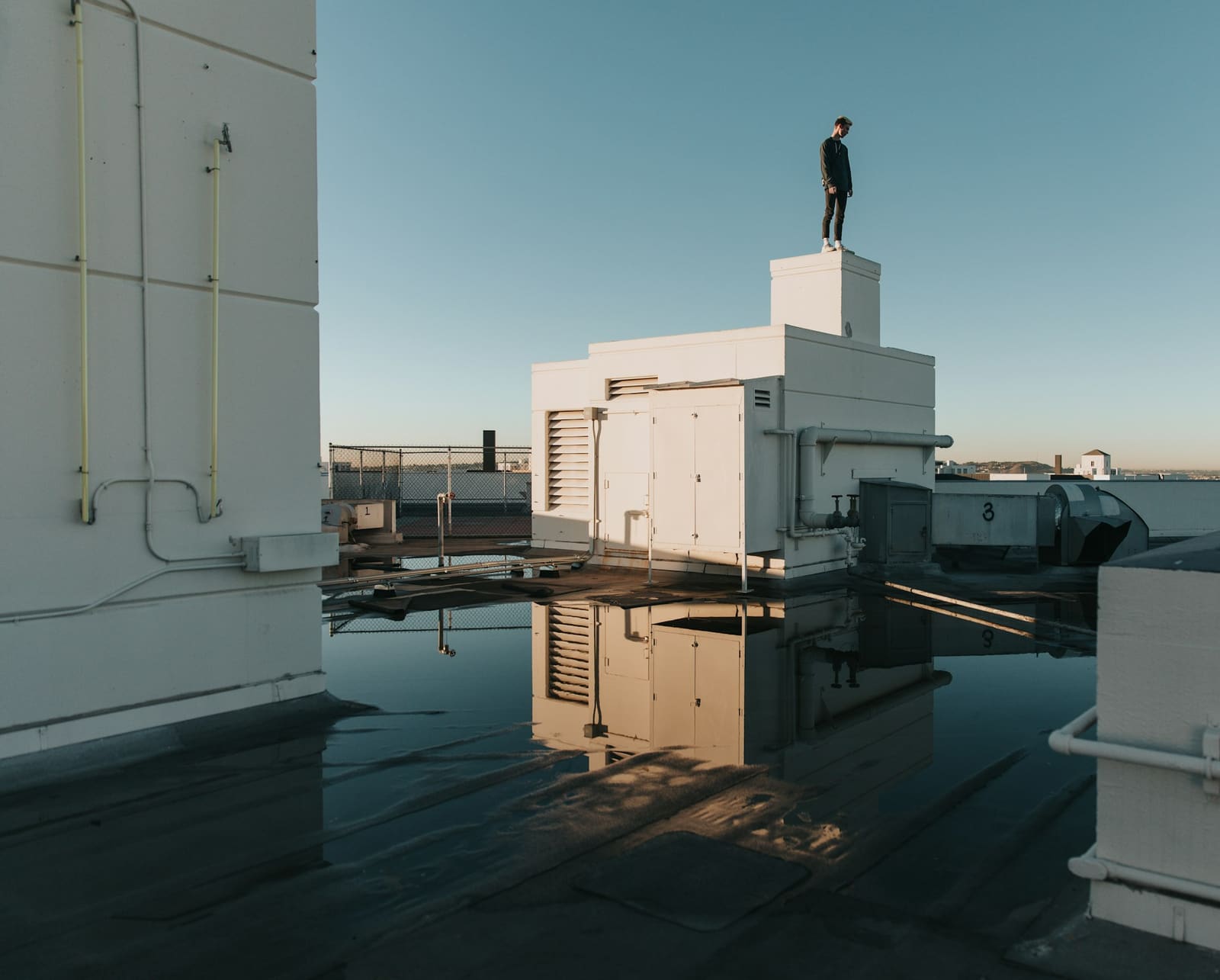
Water still standing days after a rain is the finding that changes a scope, and it is the one nobody sees from the ground.
Intervals that fit the roof you actually have
Twice a year is the baseline: once in late winter before the spring storm season, once in fall after the summer heat has finished working on the membrane and before winter. Those two visits catch the majority of what goes wrong on a low-slope roof in this climate.
The interval moves from there based on the building. A roof with heavy mechanical equipment and constant service traffic needs more attention than a warehouse nobody walks. Kitchen exhaust puts grease on the membrane and degrades it, which argues for quarterly. Roofs with a history of ponding, roofs approaching the end of their expected life, and roofs with tenants who report ceiling stains all move up the frequency.
Storms add unscheduled visits. North Texas produces hail events that leave no visible interior evidence for years, and a post-event look while the evidence is fresh is worth more than a scheduled visit six months later. That is the visit most buildings skip and the one that changes outcomes.
What happens on a scheduled visit
Drains, scuppers and gutters get cleared and the strainers checked and reseated. Debris gets removed from the field, from behind curbs, and from the low areas where it collects and holds moisture against the membrane. This is unglamorous work and it prevents more damage than everything else combined.
Then the survey. Seams and laps get probed at intervals and anywhere the surface suggests movement. Curb, wall and penetration flashings get checked for splits, open corners and failed terminations. Pitch pans get checked for shrinkage. Edge metal and coping joints get checked for lifted or open sections. The field gets walked for splits, blisters, punctures, foot traffic damage and fastener backout.
Equipment gets attention because equipment causes damage. Condensate lines discharging onto the membrane, refrigerant lines resting directly on the sheet, missing or displaced walk pads, unsupported conduit, and units with panels removed and left on the roof all get flagged. Minor items get corrected during the visit. Anything larger gets photographed, measured and priced separately so you decide rather than getting surprised by an invoice.
The file is as valuable as the work
Every visit produces a dated photo log tied to locations on a roof plan, a written condition summary, a list of what was corrected that day, and a list of open deficiencies ranked by urgency. Over several visits that becomes a history: which areas keep coming back, how fast a blister is growing, whether a repair from two years ago is still tight.
That history is what turns a roof into a budget line instead of an emergency. A facilities director holding three years of dated photographs can defend a capital request with evidence rather than adjectives, and can time a replacement to a budget cycle rather than to a Tuesday in May.
It also matters for the documentation that came with your roof system. Manufacturer coverage on a commercial assembly is conditional, and the conditions are typically about periodic inspection, keeping drains clear, and repairing damage promptly by acceptable methods. An owner who cannot produce records of any of that has a weaker position when it counts. We keep the records that support your file. The coverage itself is between you and whoever issued it.
Rooftop traffic is the variable you control
More commercial roofs are damaged by people than by weather. HVAC technicians drop tools and drag equipment. Sheet metal screws and cut zip ties get left behind and get stepped on. Antenna and satellite installers fasten straight through the membrane and seal it with whatever is in the truck. Every one of those becomes a leak on a schedule nobody is tracking.
Walk pads along the routes people actually use, from the hatch or ladder to every unit, cost very little and remove most of that risk. Pads only work if they follow the real path, which is why we map where the wear marks are rather than where a drawing says the path should be.
A simple rooftop access rule helps as much as any material. Anyone going up signs in, and any vendor who fastens, cuts or sets anything on the roof reports it. That one sentence in a service agreement prevents the specific leak that shows up four months after a unit was replaced and nobody remembers why.
Drains and scuppers
Cleared, strainers checked and reseated, sumps inspected for standing water that never leaves between rains.
Seam and lap survey
Probed at intervals across the field and anywhere the surface reads as moved, opened or previously repaired.
Flashings and terminations
Curbs, walls, pipe penetrations, pitch pans, term bars and coping joints checked for splits, shrinkage and open corners.
Splits and blisters
Measured and photographed on each visit so growth between visits is visible instead of guessed at.
Traffic and walk pads
Wear routes mapped, pads recommended where people actually walk, and equipment damage documented as it appears.
Post-storm visits
An extra look after a significant hail or wind event, while the evidence is fresh and still readable.
Common questions
How often should a commercial roof be inspected?
Twice a year covers most buildings, timed before spring storms and after the summer heat. Quarterly makes sense for roofs with heavy mechanical traffic, kitchen exhaust, a history of ponding, or an assembly in the last few years of its expected life. Add an unscheduled visit after any significant hail or high wind event.
Does maintenance genuinely extend roof life?
The failures that end a low-slope roof early are almost all preventable and almost all cheap when caught: a blocked drain, an open lap, a split at a curb corner, a puncture from dropped hardware. Left alone, each one wets insulation, and wet insulation is what turns a repair into a replacement. Catching those is the entire mechanism.
What happens to the documentation that came with our roof if nobody inspects it?
Manufacturer coverage on a commercial system carries conditions, and those usually include periodic inspection, keeping drainage clear, and prompt repair by acceptable methods. If you cannot show that any of it happened, you are in a weaker position if you ever need to rely on that paperwork. We keep the inspection and repair records that support your file, and the coverage itself remains between you and the issuer.
Do you maintain roofs you did not install?
Yes, and that is most of the work. The first visit takes longer because it establishes a baseline: the assembly is identified, the roof plan is drawn or updated, existing deficiencies are catalogued, and cores are taken if the condition warrants. Subsequent visits measure against that baseline, which is what makes the trend readable.
What is covered by the visit and what costs extra?
Inspection, documentation, drain and debris clearing, and minor corrections that a technician can complete during the visit are part of it. Anything requiring material, extended labor, or opening the assembly gets photographed, scoped and priced for your approval first. You will not find work on an invoice that you did not agree to beforehand.